Nature & health
Nature therapy: 5 simple ways to more calm and a stronger connection to nature
Five small exercises that make it easier to find calm and a stronger connection with nature, even in a busy everyday life.
In short
- Nature therapy has its roots in Japanese forest bathing, shinrin-yoku, from 1982.
- Time in nature activates the parasympathetic nervous system, which helps the body relax.
- It does not take winter swimming: a few minutes in nature every day makes a difference.
- Landjord's five tips: mindfulness, grounding, your senses, silence and getting to know the species.
We have heard it many times: nature can calm the nervous system and help reduce stress. Even so, it can be hard to build a real connection to nature in a busy everyday life – especially if you don't have forest, beach or sea right outside your door.
Maybe you know the feeling of restlessness, having no energy to spare or a nervous system that is constantly on high alert. We know we have drifted away from nature. We know we ought to take that walk before picking up the kids, instead of rushing off or scrolling on our phones. Most of us do – maybe we just lack some concrete methods. Simple habits we can build into everyday life that, in a manageable way, create the connection to nature we are really looking for.
Why nature works on your nervous system
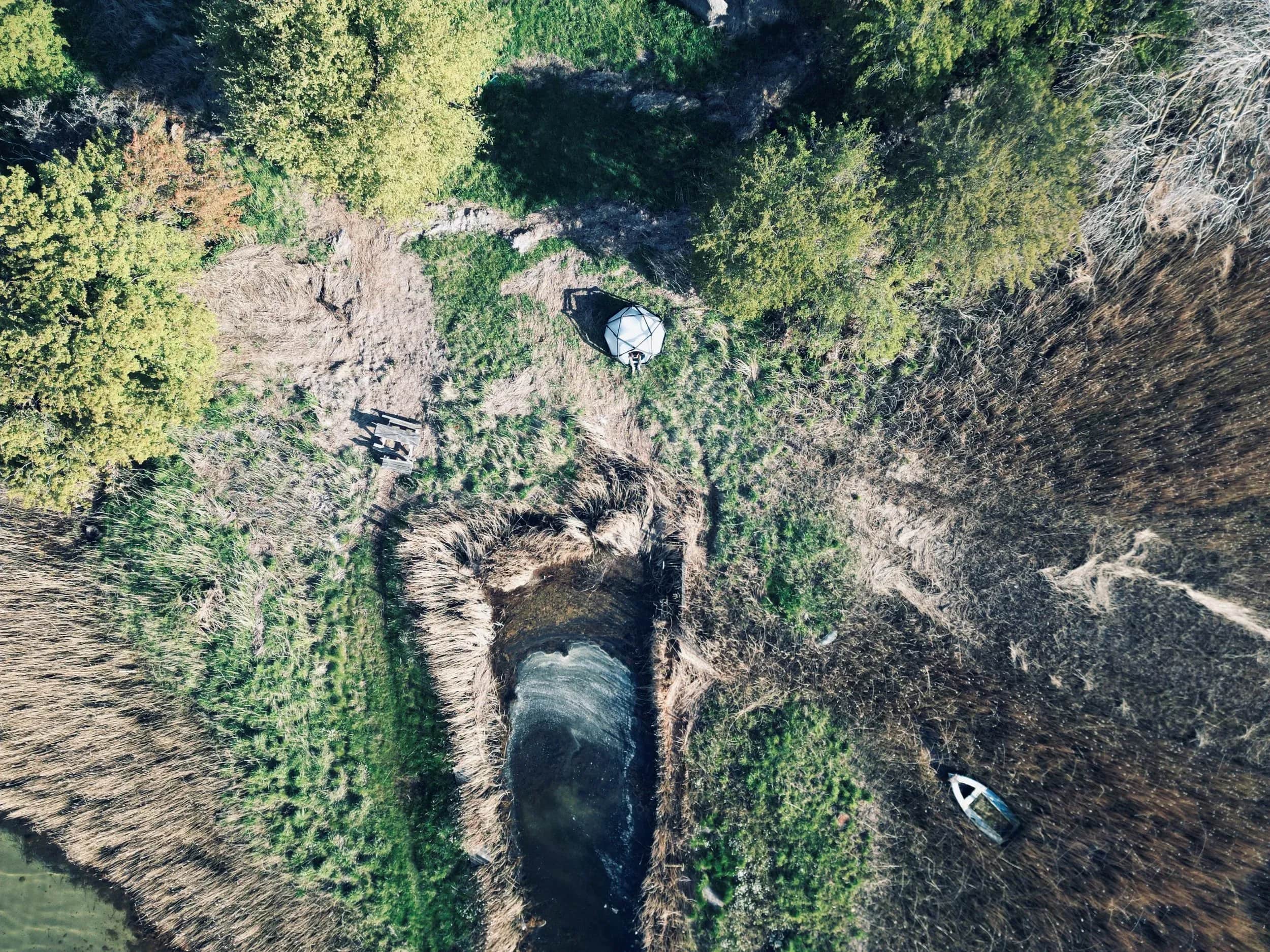
Nature therapy has its roots in the Japanese concept of forest bathing, or Shinrin-yoku. The method was introduced by the Japanese Forestry Agency in 1982 as a way to improve public health while strengthening the protection of the country's forests – rooted in a long Japanese tradition of seeing nature as a source of healing.
When we spend time in nature, the parasympathetic nervous system is activated, which helps the body relax, recover and digest. That is part of the explanation of why nature can be an effective path to less stress and a calmer, more natural rhythm of life.
The vagus nerve plays a central role here. It runs from the base of the skull, behind the ears, down along the neck and through the chest, where it branches out to the lungs, heart, gut and other organs. Because the nerve is connected to the lungs, your breathing is one of the most direct ways to activate it. When the system is activated, your pulse drops, blood vessels widen, digestion is stimulated and the muscles relax – all of which makes it easier for the body to rebuild energy and repair tissue.
The research behind nature therapy
Sus Sola Corazon has described in an article on Videnskab
You don't have to go winter swimming to get the effect
Many people today turn to nature through winter swimming, hiking or kayaking, and those can be wonderful ways to strengthen body and mind. But it does not have to be extreme, physically demanding or time-consuming. You don't necessarily have to swap the package holiday for a hike if you would rather relax by the pool with your family – and it doesn't have to be winter swimming either, if you can't stand the thought of cold water.
You can actually strengthen your relationship with nature and your well-being quite a lot with just a few minutes in nature every day. It could be on your way to pick up the kids, 10 minutes on the balcony after dinner, or 5 minutes outside in your lunch break. Or a small 20-minute ritual at the weekend that you do with your partner, a friend or your children – and that spreads ripples of presence and joy in nature to the people you care about.
Maybe it is just about shifting your focus.
Landjord's 5 tips for a stronger connection to nature
Here are 5 simple exercises to strengthen your connection to nature. Feel free to keep them in mind the next time you visit one of our nature campsites – See our primitive campsites in Denmark.
Try one of the points this month and another the next. Finding calm should not feel more stressful – your life and your needs set the pace. Everything is okay.
1. Mindfulness – shift your focus
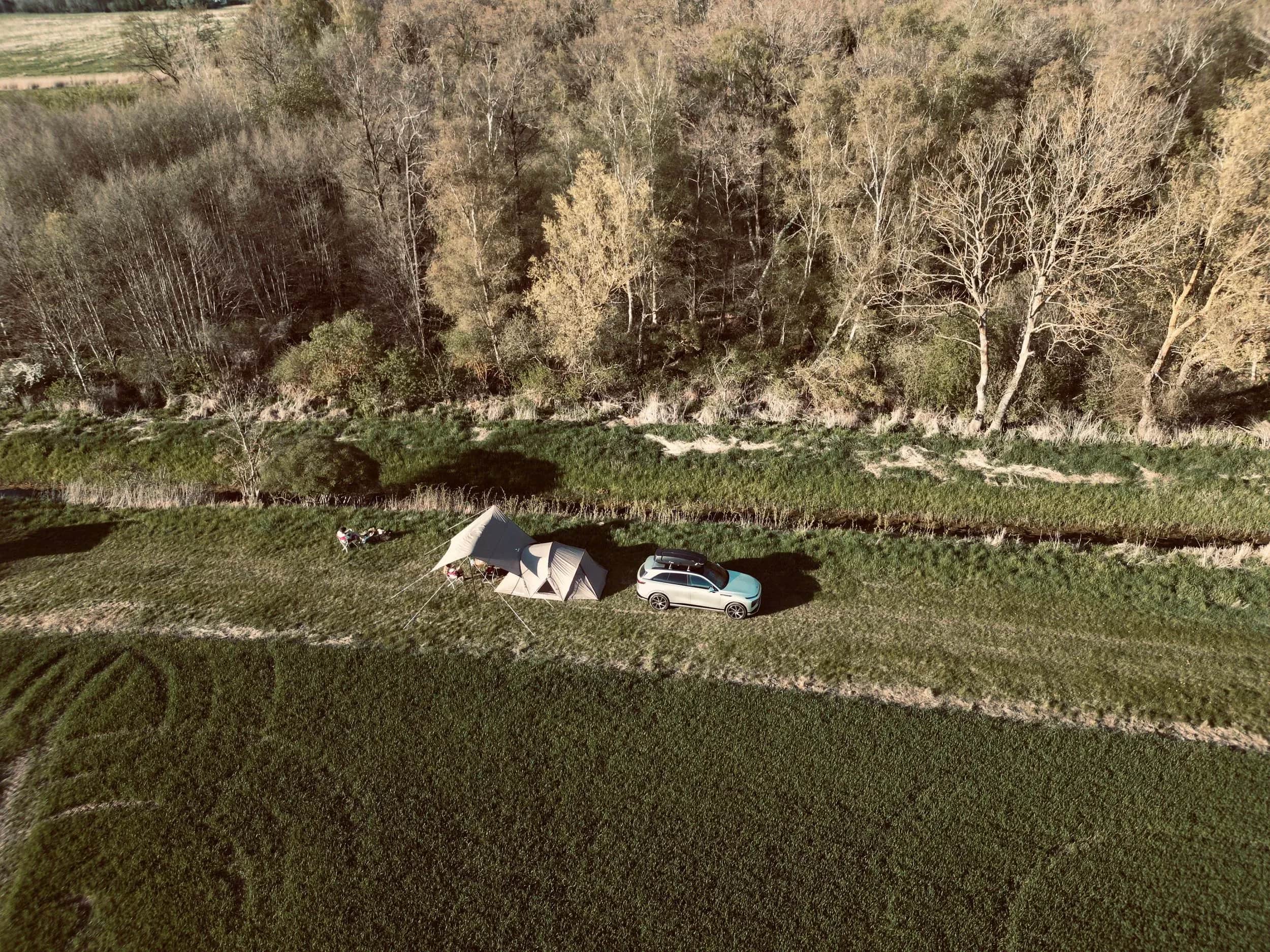
Be present in the outdoor spaces you move through. Look up instead of down, and observe. Where are you right now? Feel your feet meet the ground, and your whole body moving. Be present with both what is outside and what is inside – see if you can notice something new in the landscape. If you do this briefly every day, you change the way you are in the world and can more easily let go of racing thoughts and stressful thoughts about tasks you need to get done – or didn't get done. Maybe you can even feel your breathing getting deeper, and in that way activate the vagus nerve and help the body repair itself.
2. Grounding – make physical contact with the earth
Take off your shoes and socks in the grass. Feel the ground, breathe deeply, and maybe close your eyes. Electrons from the earth are absorbed through the more than 200,000 nerve pathways in your foot and are said to reduce inflammation, improve sleep quality and energy levels, reduce stress and boost blood circulation.
3. Use your senses – 5 minutes a day
Lie down in the forest, in the park, on the balcony or in the garden. Close your eyes and breathe through your nose. What can you hear – and how far away? Which sound is closest? What can you feel, and what can you smell?
Spend a little time here, and see how long you can stay with your eyes closed – challenge yourself a little more each time. Then open your eyes and notice both the small details and the wide horizon. Keep feeling your body and breathing through your nose. Feel free to hum a little tune.
If you need a specific place to practise, Terapihaven (the therapy garden) at Vestre Kirkegård is open to everyone at weekends – an area built to encourage sensory experience and silence.
4. Silence – find calm in movement
Go for a walk in silence, and leave your phone at home. Notice where your awareness goes, and what happens when you tune in. You can say to yourself: "I let go of the day" and "I am here right now."
A small challenge could be to walk in the park with your partner or a friend without talking – set aside 10 minutes for it. There are also groups that go on walks together and practise different mindfulness exercises, e.g. Rute til ro from Københavns Kommune and Natur Refugium with their forest bathing and events.
5. Build a relationship with nature – get to know the species
Get to know a new plant every week, and see if you can find it near where you live. Maybe keep a small diary of your new plant acquaintances, notes from the day, experiences and encounters – or press a leaf or a flower between the pages.
That way you shift your focus and use nature to dissolve the thoughts of the day, while building relationships with the living things around you. A book like Danmarks Natur: Vilde planter by Dorte Rhode Nissen can be a good place to start if you want more knowledge along the way.
Want to go deeper into nature therapy?
Sometimes you need more than good everyday habits – maybe you need a real shake-up and help finding your way back to your relationship with nature. There are several private programmes and courses that offer both professional and personal development in your relationship with nature.
Fri Natur offers nature therapy programmes aimed at people affected by stress and depression. Nina Lerche is behind the programme Naturterapeutisk Mindfulness, a one-year programme that strengthens both your mental health and your relationship with nature, with access to a community, teaching materials and teaching by professionals and nature lovers – and you can become a certified instructor along the way. She also has the podcast Naturens Stemmer, if you want to listen your way into the subject.
If you would rather read more, Naturterapi by Lasse Thomas Edlev and Naturdannelse by Nikolaj Voldum Ahlburg and Line Beck are good choices for further reading, full of knowledge and exercises to bring nature closer to your life.
Get started with your connection to nature
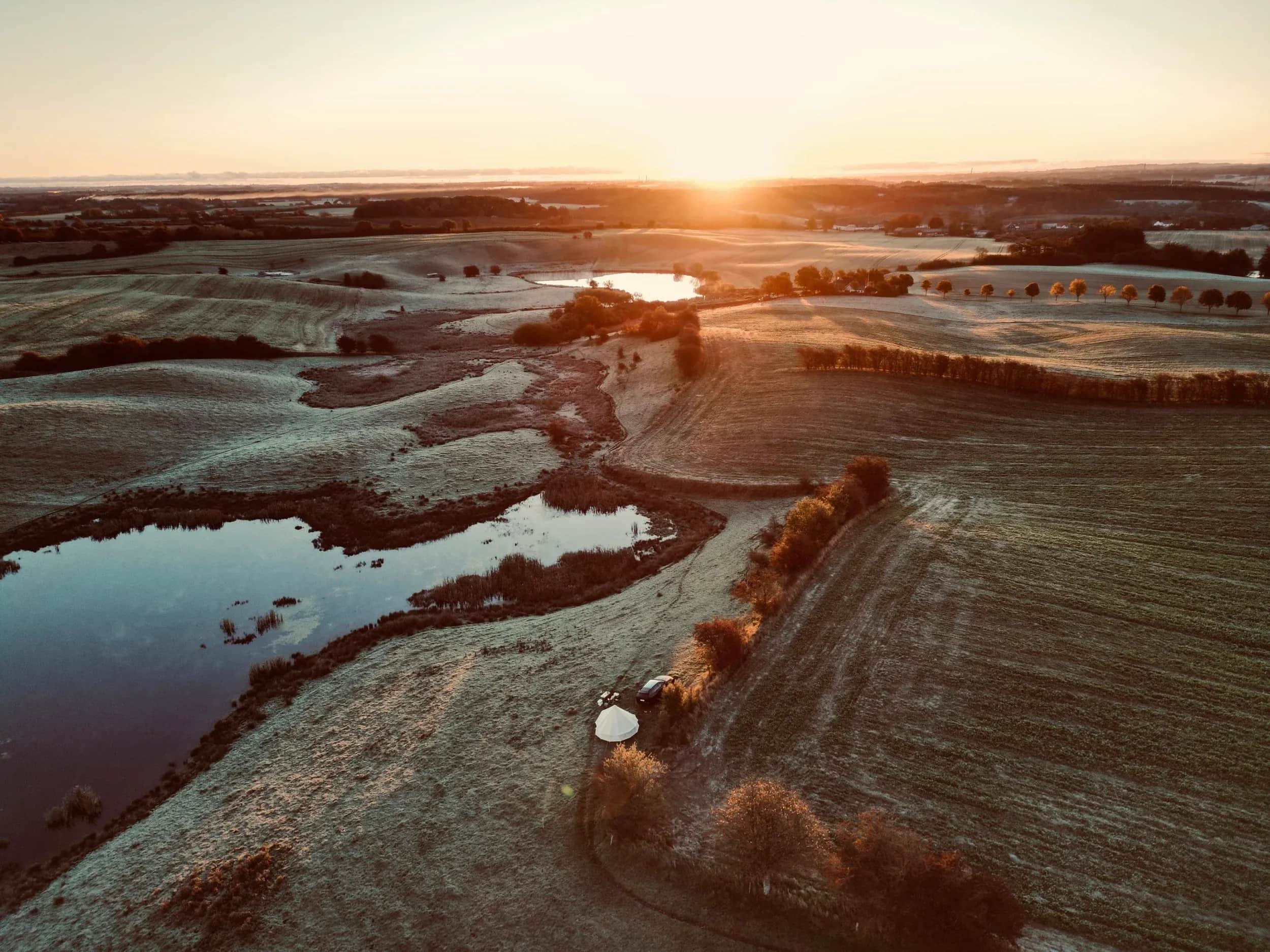
Do you dream of more undisturbed nature experiences with friends or family, but run out of time when it comes to planning the hike? With a Landjord membership you get access to what will soon be 28 different nature campsites around Denmark.
It is an easy and affordable way to take a small break from everyday stress and fixed routines, and a good chance to try some of the methods above. If you are unsure about gear, we have put together a guide to what you need – Packing list: what do you need to camp in nature?
We hope you will spend a few minutes outside letting go of the day and finding calm in your body – with help from the nature that exists both inside you and all around you. Thank you for reading.
Was this article helpful?
Sources
- Videnskab
.dk: Stress: Does nature therapy work as well as traditional treatment? On Sus Sola Corazon's research. videnskab.dk